Photos from Cuba
| Home | About | Guestbook | Contact |
CUBA - 2016
|
A short history of Cuba
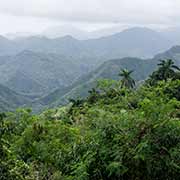
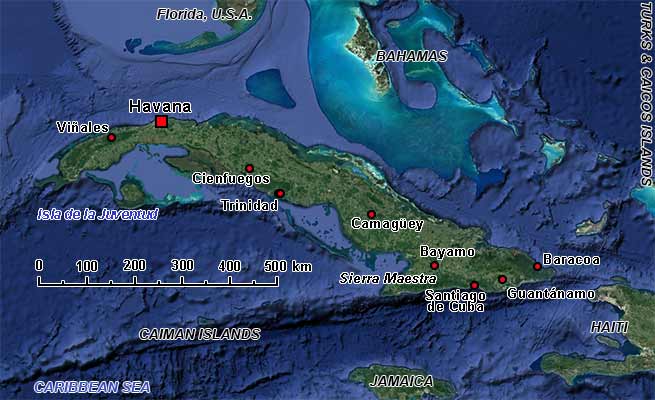
The Republic of Cuba, with Isla de la Juventud to the south and a few small islands offshore, is in the northern Caribbean, south of the US state of Florida and the Bahamas, west of Haiti and north of Jamaica. Its main island is the largest in the Caribbean. Cuba has an area of 109,884 km² and over 11 million inhabitants. Before the arrival of the Spanish, Cuba was inhabited by three distinct tribes of indigenous peoples of the Americas. The Taíno, an Arawak people, originally from South America and the dominant culture in most of the northern Caribbean, had migrated here from the island of Hispaniola, east of Cuba (now Haiti and the Dominican Republic) in the third Century CE. They were farmers and the dominant culture in Cuba, with an estimated population of 150,000 when Columbus arrived here in 1492. The Ciboney, or Siboney, was a Western Taíno group living at least since 3,000 BCE in central Cuba, with a dialect and culture distinct from the Classic Taíno of the eastern part of the island; however, much of the Ciboney territory was under the control of the eastern chiefs. The Guanahatabey (or Guanajatabey) lived on the western tip of Cuba and were probably archaic hunter-gatherers with a distinct language and culture, a relict of an earlier civilisation that spread widely through the Caribbean before the arrival of the agriculturalist Taíno.
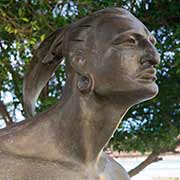
In 1511, Diego Velázquez de Cuéllar set out from Hispaniola to conquer the island of Cuba (the Taíno name, as recorded by Columbus) and founded the first Spanish settlement at Baracoa. Other towns soon followed, including Santiago and San Cristobal de la Habana, founded in 1515, later becoming Havana’s capital. The native Taíno were forced to work as slaves under the encomienda system, a labour system in Spain and the Spanish Empire. It rewarded conquerors with the labour of subject people, resembling the feudal system in Medieval Europe. This forced labour led to rebellions by the local people in the different islands, now occupied by the Spanish. A Taíno chieftain named Hatuey, who, before Diego Velázquez arrived, had fled from Hispaniola to eastern Cuba with a party of four hundred in a canoe, warned the people there what to expect from the Spaniards. However, the Taino chiefs did not respond to this, and few joined him to fight. Hatuey resorted to guerrilla tactics and killed at least eight Spanish soldiers, but the Spanish, torturing the people for information, captured him; on 2 February 1512, he was tied to a stake and burned alive at Yara, near the present-day city of Bayamo. Hatuey is now celebrated as “Cuba’s First National Hero”. Within a century, the indigenous people were virtually wiped out by infectious diseases brought by the Spanish and by the harsh conditions of the repressive colonial regime. In 1529, a measles outbreak in Cuba killed two-thirds of those few natives who had previously survived smallpox. Nowadays, those claiming Taíno ancestry also have Spanish ancestry or African ancestry, and often both.
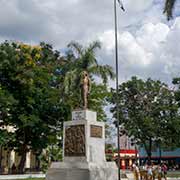
On 1 September 1548, Dr Gonzalo Perez de Angulo was appointed governor of Cuba. He arrived in Santiago, Cuba, on 4 November 1549; he declared the liberty of all natives, ending the encomienda system. He then became Cuba’s first permanent governor to reside in Havana instead of Santiago and built Havana’s first church made of masonry. Cuba developed slowly, with diversified agriculture and became an urbanised society, supporting the Spanish colonial empire, unlike the plantation islands of the Caribbean. By the mid-18th Century, its colonists held 50,000 slaves. During the Seven Years’ War (1756 - 1763), Spain sided with the French against the British. In 1762 the British besieged Havana: it surrendered. British admiral George Keppel became the new governor, opened trade with the North American and Caribbean colonies and imported thousands of slaves from West Africa to work on the underdeveloped sugar plantations. A year later, the Peace of Paris was signed in which the British left, returning Cuba to the Spanish in exchange for Florida. For many British, at the time, this was considered a poor deal. In the late 18th Century, the Haitian Revolution in which the slaves liberated themselves caused anxieties among the Cuban planters, prohibiting slaves from the French colonies while importing some 325,000 directly from Africa between 1790 and 1820. But because Cuban slaves worked primarily in urbanised settings, the practice of “coartación” (buying oneself out of slavery) developed, and free blacks dominated urban industries; by 1860, Cuba had 213,167 free people of colour, 39% of its non-white population of 550,000. While in the first half of the 19th Century, the Latin American countries of Spain’s empire had rebelled and formed independent states, Cuba had remained loyal to Spain. But on 10 October 1868, planter Carlos Manuel de Céspedes started a rebellion, the “Grito de Yara”, and freed his slaves to fight with him for an independent Cuba. On 27 December 1868, he declared freedom for any slaves whose masters presented them for military service; 2,000 Chinese, imported as indentured labour, joined the rebellion. It led to what was known as the Ten Years’ War and devastated the country; Céspedes was killed in 1874. The war ended in 1878, with Spain still in control but promising greater autonomy. In 1879–1880, Cuban patriot Calixto García attempted to start another war, known as the Little War, but this did not receive enough support.
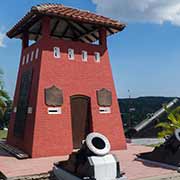
In 1892 an exiled dissident named José Martí founded the Cuban Revolutionary Party in New York with the aim of Cuba’s total independence. He reached Cuba in 1895 when the fighting started and was killed in the Battle of Dos Rios on 19 May 1895; José Martí is now celebrated as Cuba’s national hero. There were 200,000 Spanish troops on the island, outnumbering the rebels; people living in the rural areas were herded into “reconcentrados”, virtual concentration camps. Between 200,000 and 400,000 Cuban civilians died from starvation and disease. On 25 January 1898, the United States sent the battleship “Maine” into Havana harbour to protect US interests. Three weeks after its arrival, it exploded and sank with great loss of life, from a cause never conclusively explained; however, public opinion in the US was that Spain was to blame, and in late 1898 the two countries were at war. The Americans decided to capture the city of Santiago, and together with the Cubans, they eventually prevailed: Santiago surrendered on 16 July 1898. US General Nelson A. Miles would not allow Cuban troops to enter Santiago, claiming to prevent clashes between Cubans and Spaniards. They excluded Cuban General Calixto García, head of the Mambi forces (the guerrilla Cuban independence soldiers), from entering the city. On 10 December 1898, Spain and the United States signed the Treaty of Paris, by which Spain ceded Puerto Rico, the Philippines, and Guam to the United States for the sum of US$20 million and gave up all rights to Cuba, which gained formal independence from the US on 20 May 1902. The Republic of Cuba received a constitution in which the US retained the right to intervene in Cuban affairs and supervise its finances and foreign relations. Under the Platt Amendment, the US leased Guantánamo Bay naval base from Cuba, which continues today.
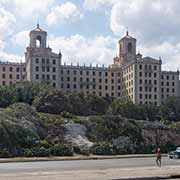
The first Cuban President, Tomás Estrada Palma, is now condemned as having allowed the Platt Amendment to be enacted, allowing the US to intervene in Cuban affairs and the lease of Guantánamo Bay. In the first half of the 20th Century, American intervention led to a three-year occupation between 1906 and 1908. After the election of President Gerardo Machado in 1924, American-owned hotels and restaurants were built to accommodate the influx of tourists; the tourist boom led to increases in gambling and prostitution in Cuba. The country produced sugar to be exported to the US. When the price of sugar collapsed, following the Wall Street Crash of 1929, political unrest and repression followed by uprisings among sugar workers and an army revolt forced Machado into exile in August 1933. A month later, Sergeant Fulgencio Batista led a revolution that started his domination of Cuban politics for the next 25 years, first through a series of puppet presidents and, after a new constitution was adopted in 1940, as President until 1944. He then lived in Florida until 1952, when he returned to run for President again. Facing inevitable electoral defeat, he led a military coup, got back in power and suspended the 1940 Constitution, revoking most political liberties, including the right to strike. Batista’s repressive government then began to profit from exploiting Cuba’s commercial interests systematically. He negotiated lucrative relationships with the American Mafia, controlling Havana’s drug, gambling, and prostitution businesses. Large U.S.-based multinational companies were awarded lucrative contracts. He received financial, military, and logistical support from the US government, aligning himself with the wealthiest landowners who owned the most extensive sugar plantations. He presided over a stagnating economy that widened the gap between rich and poor, with also the middle class suffering from unemployment and political persecution.
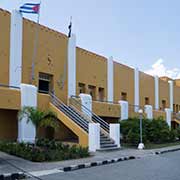
In the 1950s, various organisations competed for public support in bringing about political change, including some advocating armed uprising. A young lawyer, Fidel Castro, who had wanted to enter as a candidate in the now-cancelled elections, denounced Batista for violating the Constitution, but with no effect. He then decided to take up arms. On 26 July 1953, with a small army of companions, he launched an assault on the Moncada Barracks in Santiago to seize its arsenal and start an uprising against the reinstated dictator. But vigorous fire from the barracks ensued; about seventy survivors, mostly students, were taken prisoner, tortured, and almost all executed on the spot. Fidel, injured and tortured, was spared, imprisoned on the Isle of Pines (now called Isla de la Juventud) and tried in December 1953. Here he represented himself and made what has become a famous speech, denouncing capitalism, exploitation and warmongering, concluding with the sentence “History will absolve me”. He was sentenced to 15 years in prison but went into exile to Mexico following an amnesty in 1955. In 1956, Fidel Castro and about 80 supporters, including his brother Raúl and Che Guevara, sailed from Mexico on the small yacht “Granma” (Grandmother) to start a rebellion against the Batista government. After a stormy seven day journey, on 2 December 1956, they almost crashed the boat on Playa de las Coloradas; another revolutionary, Camilio Cienfuegos, waited for them there. Batista’s forces found them and dispersed the expedition, killing nearly all of its members. With eleven men, among whom Raúl, Che and Cienfuegos, Castro managed to survive and, after a 20-hour march, reached what became their hideout in the Sierra Maestra, to the southwest of Bayamo. They began a guerrilla war, and soon farmers and students joined them. Castro’s 26 July Movement became the leading revolutionary group and managed to inflict heavy losses on the numerically superior army of Batista.
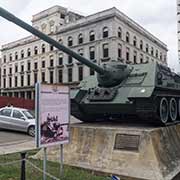
By late 1958 the rebels had broken out of the Sierra Maestra and launched a general popular insurrection. After Castro’s fighters captured Santa Clara, Batista on 1 January 1959 fled with his family to the Dominican Republic, taking with him an undisclosed number of suitcases filled with gold. He found political asylum in Portugal and was involved in business activities in Spain, where he died from a heart attack in 1973. Fidel Castro’s forces entered the capital on 8 January 1959; he took up residence with his men in the Hilton Hotel, renamed it Habana Libre, proclaimed Manuel Urrutia Lleó provisional president and himself Prime Minister. Two months later, Castro visited the US, where he was warmly welcomed, as it was thought he was bringing democracy to Cuba. However, after Castro legalised the Communist party and hundreds of former Batista men were executed, relations cooled; thousands of acres of farmland, including those from large US landholders, were confiscated. The US imposed sanctions, with a total of three bans on trade. As a result, Castro turned to the Soviet Union. By 1963, after the disastrously failed CIA plan to overthrow Castro in the Bay of Pigs invasion and the Cuban Missile Crisis that almost led to World War, Cuba moved towards a full-fledged Communist system modelled on the USSR. He dispatched troops to support Soviet-supported wars in Africa, and in the 1970s, life in Cuba had become very spartan indeed. When the Soviet Union collapsed in 1991, a severe economic downturn led to what has been named the “Special Period”, in which the population fell into abject poverty and malnutrition. Castro found a new source of aid and support in the People’s Republic of China. And leaders like Hugo Chávez, former President of Venezuela, supplied oil and gas.
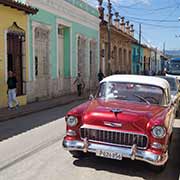
In February 2008, Fidel Castro announced his resignation as President of Cuba. On 24 February, his brother, Raúl Castro, was declared the new President. He lifted some restrictions on freedom, and life improved. Relations with the United States normalised to a degree under US President Barack Obama, but his successor Donald Trump turned the clock back and reimposed sanctions. Fidel Castro died on 25 November 2016, resulting in a nine-day mourning period. In 2019 Miguel Díaz-Canel took over as President, but the country remains a single-party dictatorship. Cuba still has a largely state-controlled planned economy, but recent years have seen more private businesses; a good example is the many “Casa Particular” and the private accommodation in family homes as a friendly alternative to state-owned hotels. The country is an excellent tourist destination with great views, beaches, friendly people and the many vintage 1950s cars, mainly American, kept running, resulting from the American embargo after the revolution. The only vehicles imported were Soviet-built, but now this is changing, and new European and Korean-built cars are seen. Cuba had until recently a dual currency system, in which the locals used Cuban Pesos (CUP), and tourists used Convertible Pesos (CUC), set at par with the US dollar. But in 2021, CUCs were phased out, and it is expected that Cuba will gradually take its place in the world like all others.